
Introduction: An Unusual Energy Proposal
Tracking global energy infrastructure requires distinguishing between physical assets, projects under development, and proposals that exist primarily on paper.
The proposed Polar LNG project in Alaska presents an unusual case. What began as an unconventional natural gas export proposal has become the subject of investigative reporting involving an American startup, Russian energy company Novatek, and diplomatic discussions between the Trump administration and the Kremlin.
Polar LNG proposed an alternative to Alaska’s traditional LNG export strategy. Rather than building an enormous pipeline from the North Slope to a southern export terminal, the company envisioned installing modular liquefaction equipment offshore with technology pioneered by Russian company Novatek. This approach would allow natural gas to be processed near its source and transported by specialized ice-breaking LNG vessels.
Just last month, in October 2026, reporting by The New York Times[1] revealed that Novatek, a Russian energy company subject to U.S. sanctions, had reportedly provided financing to the American venture through a UAE-based intermediary.
The developments raise questions about the project’s financing, technology suppliers, corporate governance, and the relationship between American energy policy and diplomatic negotiations with Russia.

A look at one of Novatek’s massive, 640,000-ton concrete-and-steel Gravity Based Structures (GBS) designed at the Belokamenka yard near Murmansk. These colossal offshore platforms—originally engineered to serve as modular liquefaction "trains" for Russia's sanctioned Arctic LNG 2 project—represent the exact marine infrastructure blueprint intended for the Polar LNG venture at Milne Point, Alaska. By utilizing a "no-pipeline" layout, the plan relies on deploying these GBS units directly onto the seabed floor to process and freeze North Slope natural gas right at the shoreline before shipping it directly across the Arctic Ocean to Asian markets.Polar LNG: The Russian Connection
Traditional Alaska LNG development plans, like Alaska LNG, involve a proposed pipeline costing approximately $25B dollars to transport natural gas from the North Slope to a southern liquefaction and export facility in Anchorage.
Polar LNG proposed a different approach.
Its concept involved installing prefabricated gravity-based structures (GBS) on the seabed near Milne Point. These offshore structures would support liquefaction equipment, allowing natural gas to be processed near existing North Slope resources and loaded onto specialized LNG carriers.
The Russian pioneered concept offered a potential alternative to the expense and construction requirements of a long-distance pipeline.
However, subsequent reporting raised questions about the company’s financial backing and technology arrangements.
According to The New York Times, Novatek secretly provided financing through Tech Wave, a UAE-based company. The reported financing reached approximately $15 million. Novatek also indicated its intention to acquire a minority ownership interest in the American venture.
The proposed technology was another important connection. Polar LNG intended to obtain liquefaction equipment associated with Novatek’s Arctic LNG 2 development in Russia, a project subject to international sanctions.
The result was an American energy proposal with significant financial and technological connections to a sanctioned Russian energy company.
Why the American Executives Resigned
The reported financing arrangements led to the departure of Polar LNG’s American CEO, Joel Riddle, and other senior executives.
Riddle reportedly resigned after discovering the source of the company’s financing and subsequently brought his concerns to federal authorities.[2]
The circumstances extended beyond ordinary disagreements about business strategy.
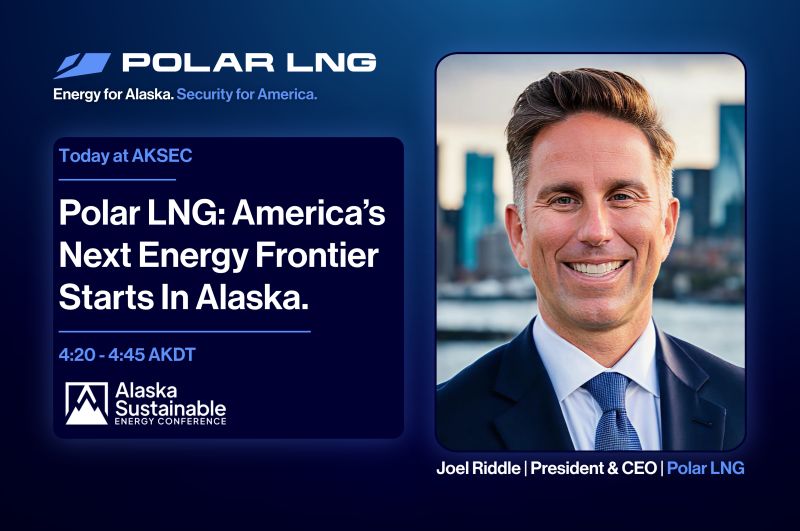
Joel Riddle pictured here before his abrupt exit as CEO from Polar LNG amidst swirling rumors connecting the project to Russian gas giant Novatek. While the official Polar LNG website now goes out of its way to explicitly declare Novatek holds no equity interest in the venture, Polar LNG has already tapped former Goldman Sachs Russia CEO Tim Talkington as their replacement CEO and steer the ship in Riddle's place.American companies conducting transactions involving sanctioned foreign entities must consider applicable Treasury Department regulations, including restrictions administered by the Office of Foreign Assets Control (OFAC).
Depending on the parties and transaction structure, financing arrangements, technology transfers, and ownership interests can create significant regulatory exposure.
Reporting also indicated that outside legal counsel identified potential sanctions concerns involving the Russian relationships.
For executives, the situation presented several considerations:
- Legal exposure: Whether financing and proposed technology arrangements complied with applicable sanctions.
- Corporate governance: Whether investors and executives had been accurately informed about the source of capital.
- National security: Whether a Russian energy company should have financial or technological influence over strategically important American infrastructure.
- Professional responsibility: Whether remaining involved created unacceptable legal or reputational risks.
These circumstances provide considerable context for understanding why senior American executives might choose to leave, even before any final legal determination.
Polar LNG has disputed aspects of Riddle’s characterization of events .
The Trump-Putin Connection and Arctic Shipping
The project also needs to be considered within the broader relationship between Washington and Moscow.
On August 15, 2025, President Donald Trump hosted Russian President Vladimir Putin at Joint Base Elmendorf-Richardson in Anchorage. The summit focused primarily on the war in Ukraine, but potential economic cooperation between the two countries was also part of the broader diplomatic discussions.

A fascinating throwback to the historic August 2025 summit in Alaska, where Donald Trump and Vladimir Putin held a joint press conference at Joint Base Elmendorf-Richardson. While the public narrative heavily focused on geopolitical standoffs and ceasefire frameworks, energy security and Arctic infrastructure were critical topics of discussion behind closed doors. Fast forward just 8 months later to April 2026, and the industry saw the official announcement of the Polar LNG project—built around a strategic memorandum to utilize Novatek’s unique gravity-based structure (GBS) technology. This photo may well capture the very room where the geopolitical groundwork for these massive Arctic energy shifts was being laid. (Photo by Benjamin D Applebaum, identified by DVIDS)Subsequent reporting connected American representatives Steve Witkoff, the administration’s special envoy, and Jared Kushner, Trump’s son-in-law and diplomatic adviser, with discussions involving Russian officials and potential commercial cooperation.
Putin reportedly discussed the Alaska gas proposal with the American representatives in 2026 as part of broader economic discussions intended to improve relations and potentially facilitate negotiations over Ukraine.
The Russian connection also extends into the shipping discussion.
In August 2025, Reuters reported[3] that American officials had considered the possible use or purchase of Russian nuclear-powered icebreaking LNG vessels to support energy development in Alaska. These special Arc-7 icebreaking vessels are purpose built to plough through ice up to 7 feet thick.
Separately, The New York Times reported in August 2026 on the administration’s $7 billion plan to acquire 11 polar icebreakers through arrangements involving Finland and American shipyards. One competing proposal involved a design originally developed for Russia, although the announced procurement was not a purchase of Russian-built LNG carriers.
An Alaska Daily News opinion piece published November 4 subsequently connected the proposed icebreaker fleet to the economics of Polar LNG.
These developments are worth considering together, but they are not a single finalized transaction.
Specialized LNG carriers, offshore liquefaction equipment, and polar icebreakers are long-term investments. They involve decades of operation, maintenance, technical support, and supply-chain relationships.
The New York Times[4] also raised questions about the procurement process for the 11 icebreakers, including the use of noncompetitive contracts and the long-term costs of supporting the fleet.
For an infrastructure project like Polar LNG, the potential involvement of Russian technology and shipping capabilities adds another layer of regulatory and strategic considerations.
Russian Sanctions, Lindsey Graham, and American Policy
Another relevant development involves the late Senator Lindsey Graham of South Carolina.
Graham spent years advocating sanctions against Russia in response to its invasion of Ukraine.
Following his death in July 2026, Congress enacted the Lindsey O. Graham Sanctioning Russia and Iran Act on September 18 [5] . President Trump subsequently issued an executive order implementing the legislation while exercising waiver authority provided by Congress.

Senator Lindsey Graham, a fierce advocate for Ukraine and a primary force behind special legislation to sanction Russia and Iran, is pictured here alongside Ukrainian President Volodymyr Zelenskyy. Yet, while Graham pushed a hard line against Moscow, the shifting alliance between Donald Trump and Vladimir Putin created a complex backdrop for the Republican senator—especially as Trump pursues an America-first energy strategy that may intersect with Arctic infrastructure and projects utilizing Russian engineering solutions.This illustrates the competing considerations within American foreign policy.
Congress continued to establish measures intended to constrain Russian economic activity, while the administration pursued opportunities for economic cooperation with Moscow as part of its diplomatic strategy.
Against that background, the reported involvement of Novatek in financing an American LNG venture deserves attention.
The contrast between sanctions policy and potential commercial cooperation is relevant to understanding the broader policy environment.
Conclusion: An Unresolved Alaska Energy Proposal
Polar LNG brings together several issues that are not often examined together: American natural gas development, Russian energy technology, international sanctions, specialized Arctic shipping, and diplomatic negotiations.
The administration has pursued improved relations with Russia while Congress has continued establishing sanctions intended to restrict Russian economic activity. Meanwhile, proposed energy and shipping arrangements have introduced the possibility of renewed commercial relationships involving Russian technology and expertise.
The departures of Joel Riddle and other executives demonstrate that the company’s financial and international relationships became a significant corporate issue. Potential legal exposure, questions about disclosure, and national-security considerations provide context for their decisions.
For now, Polar LNG remains a proposed development rather than a physical LNG export facility. Its future will depend on financing, technology, regulatory approvals, and the ability to establish a viable operating structure.
The broader question is how the United States balances diplomatic engagement with Russia against its existing sanctions policies and long-term strategic interests.
RMP Global LNG Map: Project Status Update
www.respectmyplanet.org maintains one of the most comprehensive independently assembled global LNG terminal maps available on the internet, currently tracking 101 liquefaction facilities and 201 regasification facilities[6] .
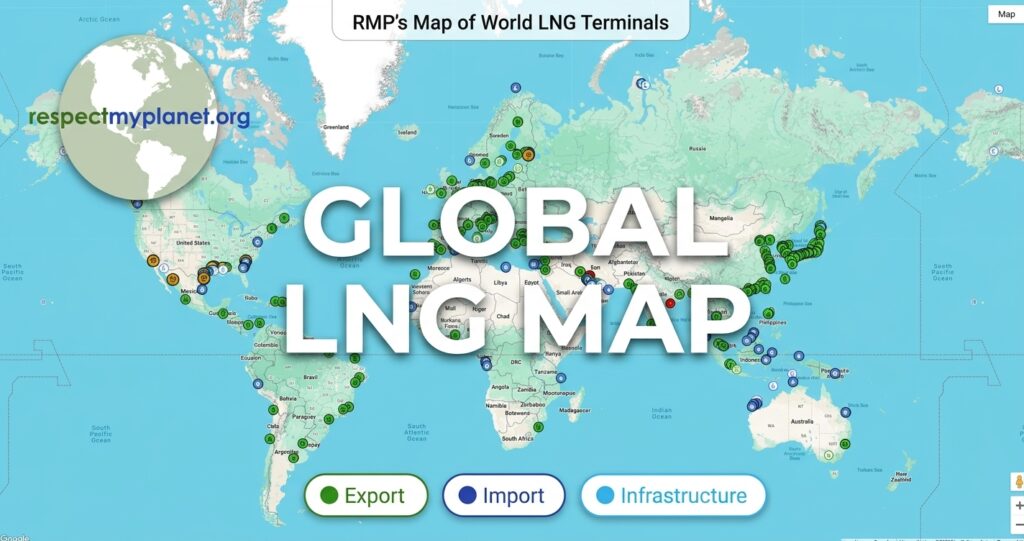
Polar LNG does not currently appear in the established global LNG terminal databases we have reviewed. However, given the growing amount of information about the company’s activities and proposed development at Milne Point, Alaska, RMP has added Polar LNG to its interactive map. You can see Polar LNG on our map by clicking here. You can see Novatek’s Arctic LNG 2 on our map by clicking here. When you first click the links, you’ll be zoomed in on our map, zoom out to see where in the world you are. RMP’s maps take you deep into every single continent except Antarctica.
The Polar LNG project is identified as proposed infrastructure, not an operating terminal. The Alaska LNG project, due south of the Polar LNG project, is also marked as a planned facility. You can imagine how much additional cost and environmental disruption a pipeline would cause to move the same (high CO2 natural gas) from the North Slope & Prudhoe Bay all the way to Anchorage.
We will continue monitoring Polar LNG’s development and update its classification as additional information becomes available.
Explore the RMP Interactive Global LNG Terminal Map.
Footnotes:
Footnote [1] – “In U.S. Gas Talks With Kremlin, Hidden Financing for Alaska Project Emerges.” The New York Times, The New York Times, https://www.nytimes.com/2026/10/23/us/politics/in-us-gas-talks-with-kremlin-hidden-financing-for-alaska-project-emerges.html.
Footnote [2] – “Russian Energy Giant Secretly Funded Alaska Natural Gas Project, According to New York Times.” Alaska Public Media, by Casey Grove, November 3, 2026, https://alaskapublic.org/news/economy/energy/2026-11-03/russian-energy-giant-secretly-funded-alaska-natural-gas-project-according-to-new-york-times.
Footnote [3] – “US Mulled Use of Russia Icebreakers for Gas Development Ahead of Summit – Sources.” BOE Report, August 15, 2025, originally reported by Reuters, https://boereport.com/2025/08/15/us-mulled-use-of-russia-icebreakers-for-gas-development-ahead-of-summit-sources/.
Footnote [4] – “Trump Arctic Ships.” The New York Times, August 1, 2026, https://www.nytimes.com/2026/08/01/climate/trump-arctic-ships.html.
Footnote [5] – “Lindsey O. Graham Sanctioning Russia and Iran Act of 2026,” Public Law 119-111, September 18, 2026, U.S. Government Publishing Office, https://www.govinfo.gov/content/pkg/PLAW-119publ111/html/PLAW-119publ111.htm; “Implementing the Lindsey O. Graham Sanctioning Russia and Iran Act of 2026,” Executive Order 14436, October 16, 2026, The White House, https://www.whitehouse.gov/presidential-actions/2026/10/implementing-the-lindsey-o-graham-sanctioning-russia-and-iran-act-of-2026/.
Footnote [6] – “RMP Global LNG Terminals Database – Interactive Map.” Respect My Planet (RMP), https://www.respectmyplanet.org/lng/global/terminals.
Leave a Reply