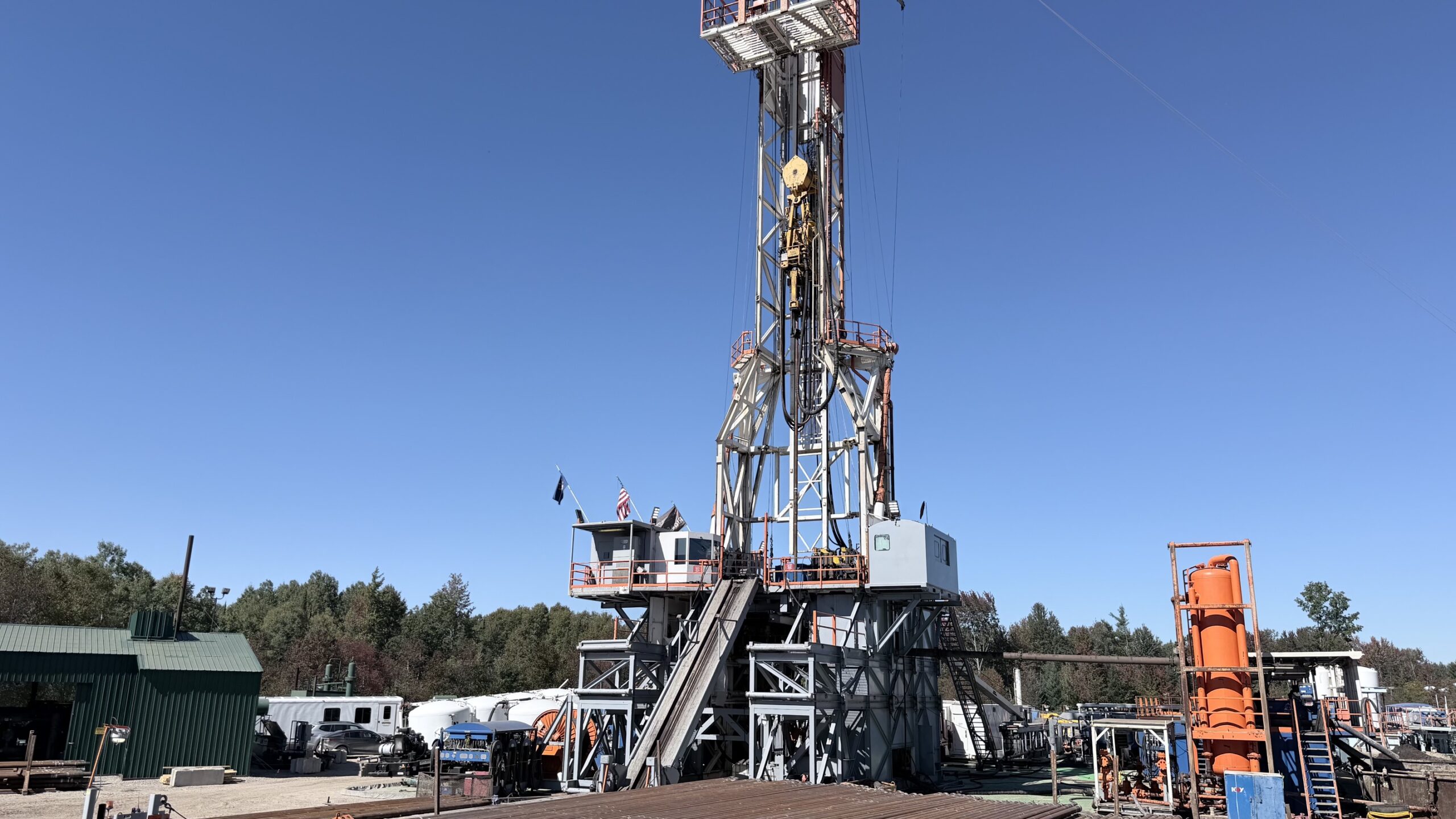
KALKASKA CO., MI —Industrial-scale drilling has quietly returned to northern Michigan’s forests. A Patterson-UTI APEX-PK drilling rig has been erected on the State Excelsior pad. This rig is a flagship model in Patterson’s line of super-spec, AC-powered pad drilling rigs. It is specifically engineered to handle complex, high-pressure, extended-reach horizontal wells. The rig is fully assembled as of today and the State Excelsior 1-14 HD1 looks like it will be spudded soon.
Because this location is set back within a state-managed recreational forest, the operation has gone largely unnoticed by the general public. However, fresh on-site photography secured today confirms that high-volume hydraulic fracturing is officially ready to commence. This project marks a significant milestone: it is the first major exploratory campaign targeting the deep Utica-Collingwood shale since industry operators paused regional testing in June 2013.
Breaking a 13-Year Deep Underground Silence
Operating under EGLE Permit Number 61886, Midland, Texas-based FortyFive Energy, LLC is attempting to solve a deep geological puzzle that has remained dormant for over a decade. The technical parameters outlined in the state permit illustrate the scale required to evaluate tight shale formations at these depths:
Well Profile: State Excelsior 1-14 HD1
-----------------------------------------------------
True Vertical Depth (TVD):     8,935 feet
Total Measured Depth (MD):    16,235 feet
Planned Horizontal Lateral:   7,300+ feet
Target Formation:             Utica-Collingwood Shale
-----------------------------------------------------
To guide a drill string down nearly 9,000 feet vertically before executing a sharp kick-off into a 7,300-foot horizontal lateral, the operator has deployed a highly specialized rig class. The Patterson-UTI APEX-PK unit utilizes a high-clearance, cantilever mast designed to stand “triples”—three-joint stands of drill pipe roughly 90 feet in length—in the fingerboard to maximize tripping efficiency. The rig utilizes a high-clearance, cantilever triple mast designed to withstand up to a 750,000-pound to 1,000,000-pound hookload
Instead of a traditional rotary table and kelly bar, the rig features an integrated AC-electric top drive system. This top drive travels vertically in the derrick, providing the continuous torque control and rotational precision required for steering a heavy drill string sideways through a narrow, low-permeability rock matrix. It has been over 13 years since a big rig like this has drilled for oil & gas in Michigan. If FortyFive Energy succeeds where Encana paused, this single well pad could serve as the blueprint for an entire regional resurgence, triggering a wave of future permitting and deep shale development across northern Michigan.
Managing High Pressures and Fluid Volumes
The massive fluid volume required for completion officially qualifies the project as a High-Volume Hydraulic Fracturing (HVHF) operation. Managing a multi-million-gallon water campaign requires serious logistics. To supply the site without disrupting local infrastructure, regulators have greenlit massive, site-specific freshwater withdrawals. Operations will rely on high-capacity temporary water supply wells on adjacent pads, pumping at combined capacities up to 1,200 gallons per minute (gpm) continuously for up to a month.
Due to the depths and mechanical forces involved, the engineering requirements focus heavily on wellbore integrity and pressure management:
- 10,000 PSI Blowout Control: The rig sits atop an integrated, elevated hydraulic “box-on-box” substructure. This elevated design is specifically engineered to provide clearance for a massive, multi-tiered 10,000 psi working pressure blowout preventer (BOP) stack to manage downhole safety.
- Heavy Casing Strings: The hole is isolated from shallow freshwater zones using a
13-3/8"surface casing set in the Coldwater Shale at 1,050 feet. It is reinforced further down with10-3/4"and8-5/8"intermediate barriers before running ultra-high-strength5-1/2"P-110 production casing through the target horizontal window. - 17.4 Million Gallons of Fluid: To stimulate the low-permeability Collingwood shale, permit documents detail an estimated total hydraulic fracturing fluid volume of 17,394,300 gallons.
To meet the water withdrawal required, the company’s Water Withdrawal Assessment Tool (WWAT) submission reveals a large-scale pumping plan in the state’s most sensitive stream classification called a “Cold transitional stream”:
- Two water wells on the Excelsior B1-24 pad (north pad where well head will be located)
• 500 gpm combined
• Depth: 200 ft (glacial drift) - Four water wells on the Oliver A3-1 pad (south pad)
• 1,200 gpm combined
• Depth: 200 ft - Monitoring wells: one on each pad at 200 ft to watch drawdown
- Water containment will be on the Oliver A3-1 pad.
- Water will be moved to the drilling pad using the Sunset Trail pipeline, which will be fully pigged before service.
- Total proposed water withdrawal listed on HVHF form is 17,394,300 gallons
Environmental and Regional Implications
The state permit enforces strict operational constraints to minimize local impact. FortyFive Energy is prohibited from constructing traditional earthen reserve pits on-site. Instead, a closed-loop system utilizing steel tanks must contain all drilling fluids, synthetic oil-based muds, and rock cuttings before they are hauled to a licensed landfill. Additionally, the operator is required to shut in and secure the adjacent, older State Excelsior 1-13 HD1 well before drilling into active pay zones.
For the oil and gas community, a successful horizontal completion here could prove that Michigan’s deep shale reserves can be unlocked safely and economically from existing surface footprints. For those monitoring industrial impacts, the sheer scale of the water and pressure requirements will undoubtedly draw close attention.
As operations progress, respectmyplanet.org will continue to track the data, update our interactive mapping platform, and provide verified, data-driven updates straight from the field.
The featured image photograph (Photo Credit: Neo; along with the photographs below) were taken yesterday (Saturday September 26, 2026). RMP will be following this well’s chronology all the way through well completion and IPR (Initial Production Results). The IPR will tell us if FortyFive Energy LLC was successful where Encana had failed. Because this well has been granted tight-hole status, it will take longer to get IPR reporting from the EGLE. But, we will FOIA the IPR report as soon as it’s available and share the numbers with you here. Stay tuned.
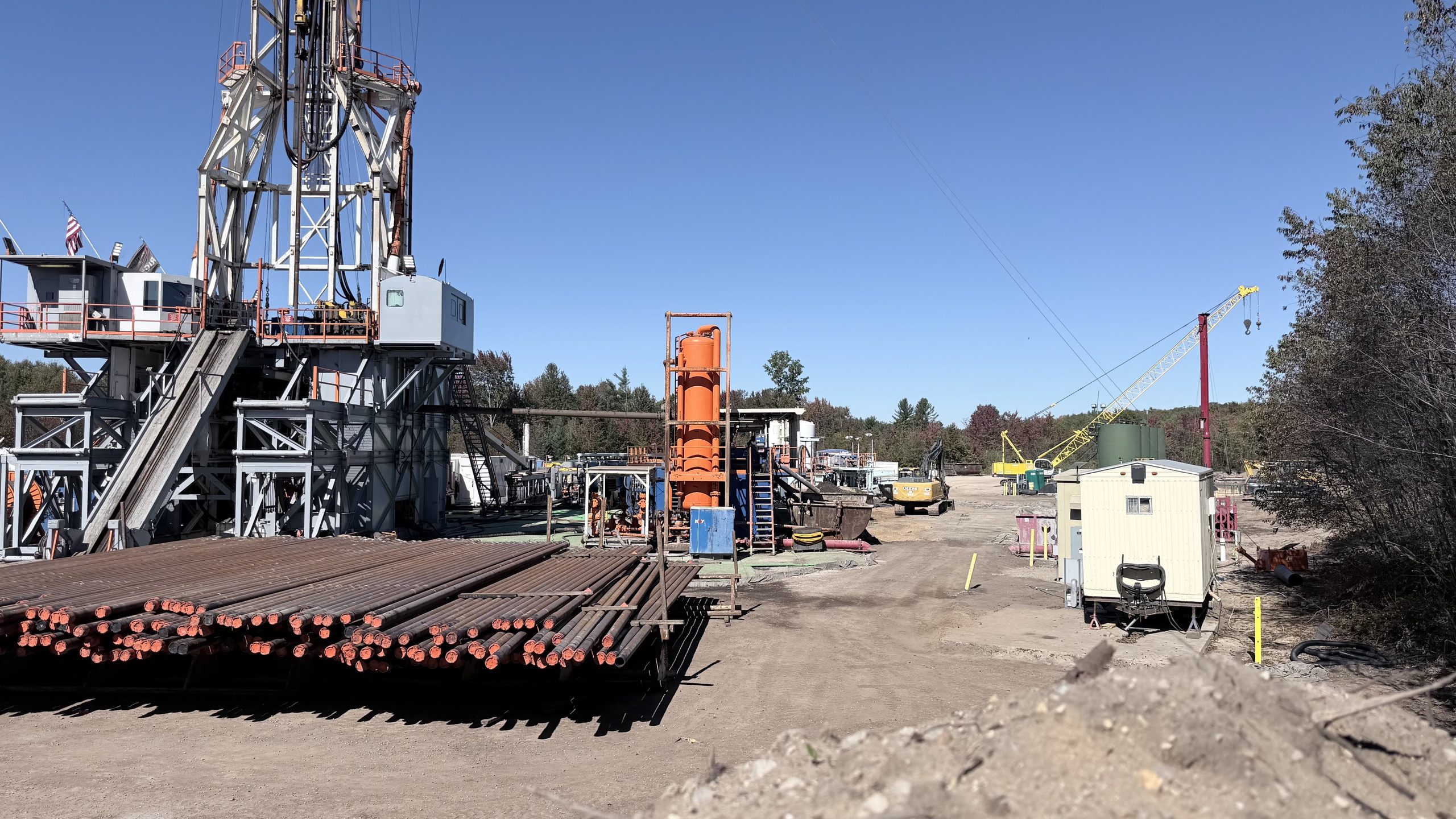
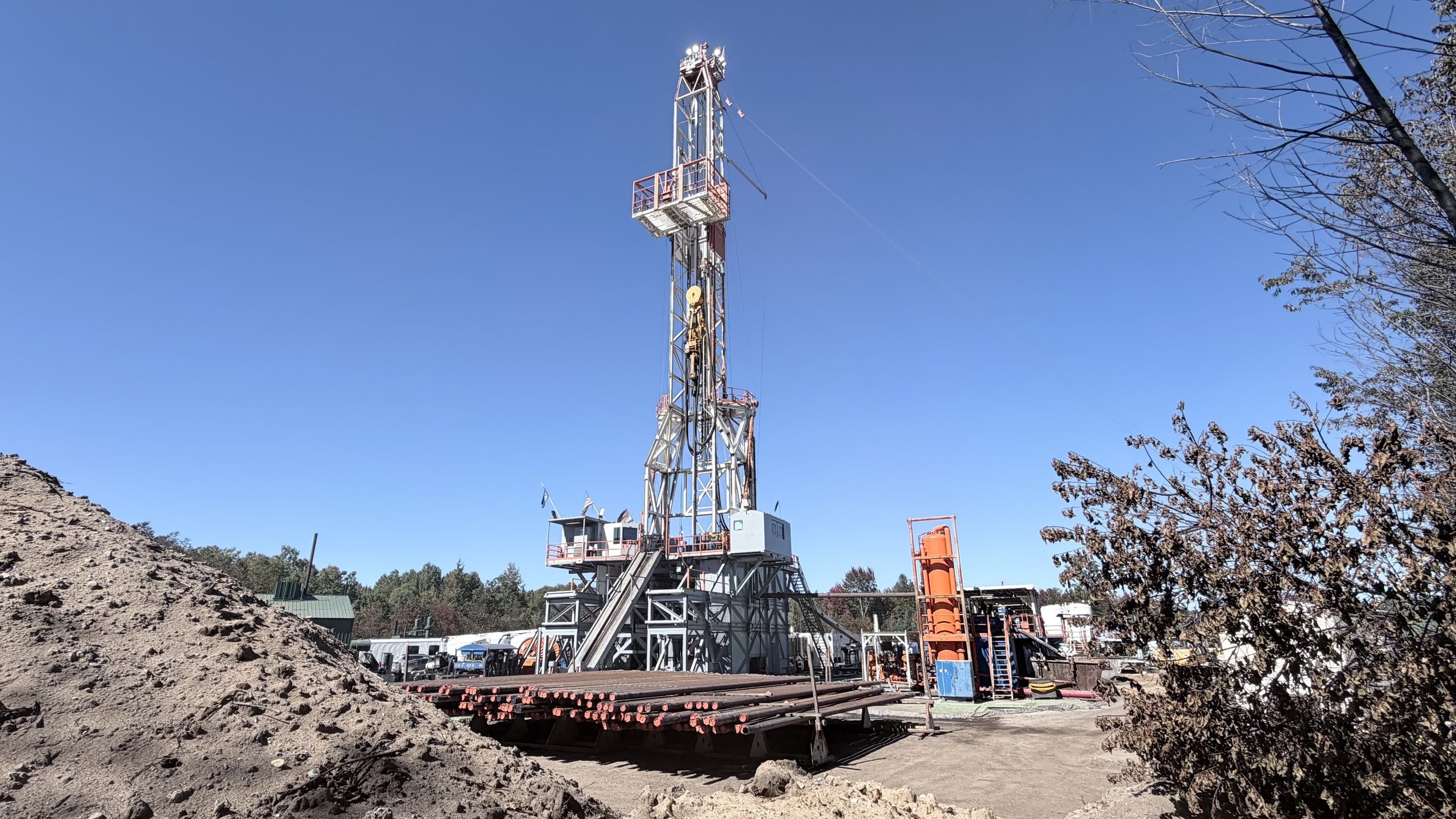
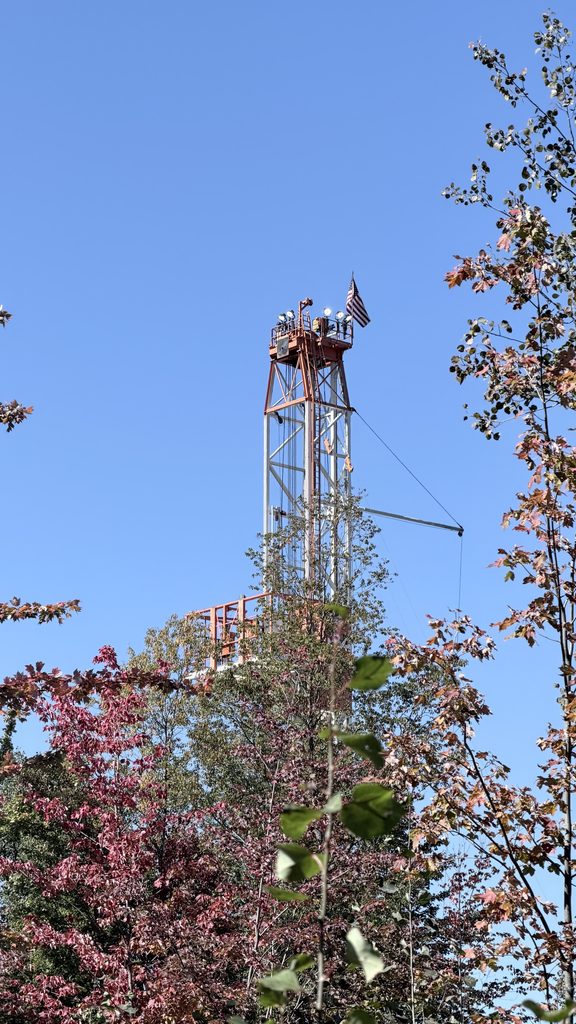
Want To Follow This Well’s Chronology & Pay Back?
If you would like to follow the chronology of this well — from rig-up, to completion operations, to initial production results once tight-hole status expires — you can follow RMP by subscribing to this blog or connecting with us on Threads, Bluesky, and facebook.
RMP is projecting that since this well is very close to spudding in late September 2026, completion could begin in late October or early November.
We will document visible operations as they occur, including drilling, water withdrawal, and completion staging. Photos and video will be shared when possible, primarily through the photographic excellence of the one they call Neo who has visited more well pads in Michigan than a 25-year staff petroleum geologist at EGLE.
Leave a Reply