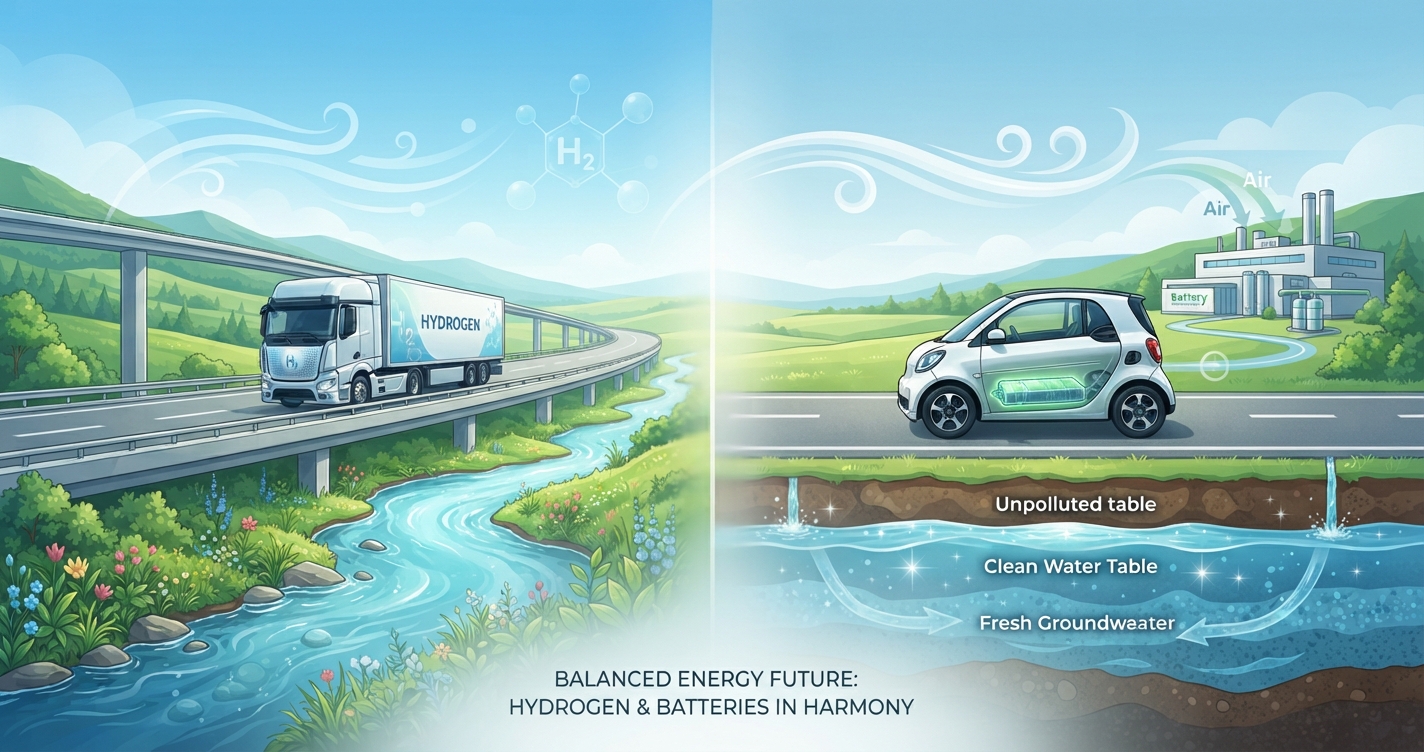
The either-or narrative dominating the zero-emission transport space frequently blinds observers to the practical environmental challenges occurring on the ground during this transition. A recent report in Automotive News regarding the clean energy sector highlights these dynamics, particularly for those who assume that scaling battery production is free of localized ecological costs.
Local Ecosystems vs. Global Carbon Goals
In Hungary, the government under Peter Magyar is executing a structural shift in oversight regarding the country’s $20 billion electric vehicle battery manufacturing hub. This policy pivot is not political posturing or ideological trolling. Instead, it is a direct response to local environmental degradation, specifically heavy metal contamination detected in regional groundwater basins.
The new administration has already suspended operations at a Semcorp separator factory for five months over groundwater pollution, fined multiple SK On plants, and paused activity at an EcoPro cathode facility. Because Hungary serves as one of the few major battery component suppliers operating outside of mainland China, these localized environmental shutdowns are creating notable logistical disruptions throughout European and North American automotive supply chains.
Smearing Solutions Creates Systemic Blind Spots
This situation underscores a systemic blind spot in mainstream clean transport discussions. When assessing decarbonization, the conversation remains almost entirely focused on global carbon dioxide emissions. While reducing CO2 is a clear benefit shared by both hydrogen and battery technologies, a singular focus on greenhouse gases can lead to the neglect of local air and water quality. An energy ecosystem cannot be considered entirely sustainable if the manufacturing infrastructure behind it compromises the water tables of the communities hosting these facilities.
This reality highlights why aggressive online friction between technology factions is so counterproductive. True industrial sustainability requires hydrogen and battery technologies to function as complements rather than competitors. It is not a zero-sum equation. By developing hydrogen infrastructure alongside battery manufacturing, the industry can fundamentally rethink how it sizes vehicle energy storage systems.
Right-Sizing the Future via Hybrid Integration
Instead of forcing large, resource-intensive battery packs into every heavy-duty or long-range vehicle, manufacturers can utilize right-sized batteries paired with hydrogen fuel cells. This architecture represents the natural evolution of the Extended Range Electric Vehicle (EREV) or traditional hybrid concept. Instead of pairing a battery pack with a petroleum-powered internal combustion engine to overcome range, weight, and charging constraints, engineers can pair a smaller battery with a zero-emission hydrogen fuel cell system.
A fuel cell and battery hybrid approach retains the immediate power delivery and regenerative braking benefits of an electric drivetrain while drastically shrinking the raw material extraction and manufacturing footprint. Reducing the physical size of the required battery pack directly reduces the industrial demand that strains local ecosystems and water supplies in manufacturing centers like Hungary.
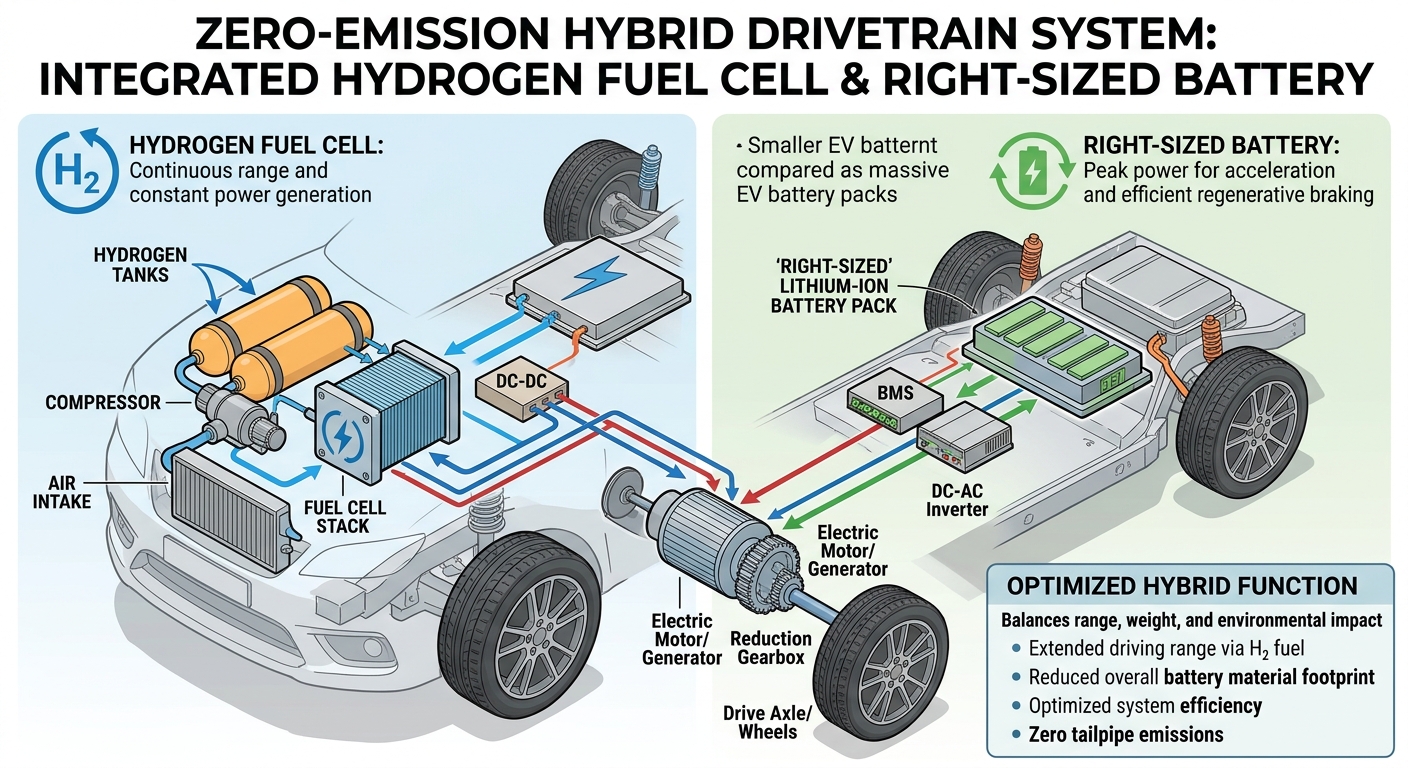
Balancing the Scale: An engineering layout demonstrating the natural evolution of the hybrid concept—pairing a continuous-generation hydrogen fuel cell system with a compact, right-sized lithium-ion battery to dramatically reduce raw material demands and minimize the manufacturing strain on local ecosystems.RMP’s Take
At respectmyplanet.org, looking at the full lifecycle of industrial production is essential to evaluating true sustainability. The supply chain constraints and environmental warnings detailed in the autonews.com article prove that protecting the global atmosphere cannot come at the cost of sacrificing localized water basins.
Batteries are a necessary component of the clean energy transition, but they must be manufactured in a sustainable way that respects local ecology. By ceasing the counterproductive tribalism between battery and hydrogen advocates, the focus can shift toward pairing these technologies together. Right-sizing battery dependency through strategic fuel cell integration allows for a massive reduction in raw material consumption while delivering a truly zero-emission transportation network from the manufacturing plant to the tailpipe.

Leave a Reply