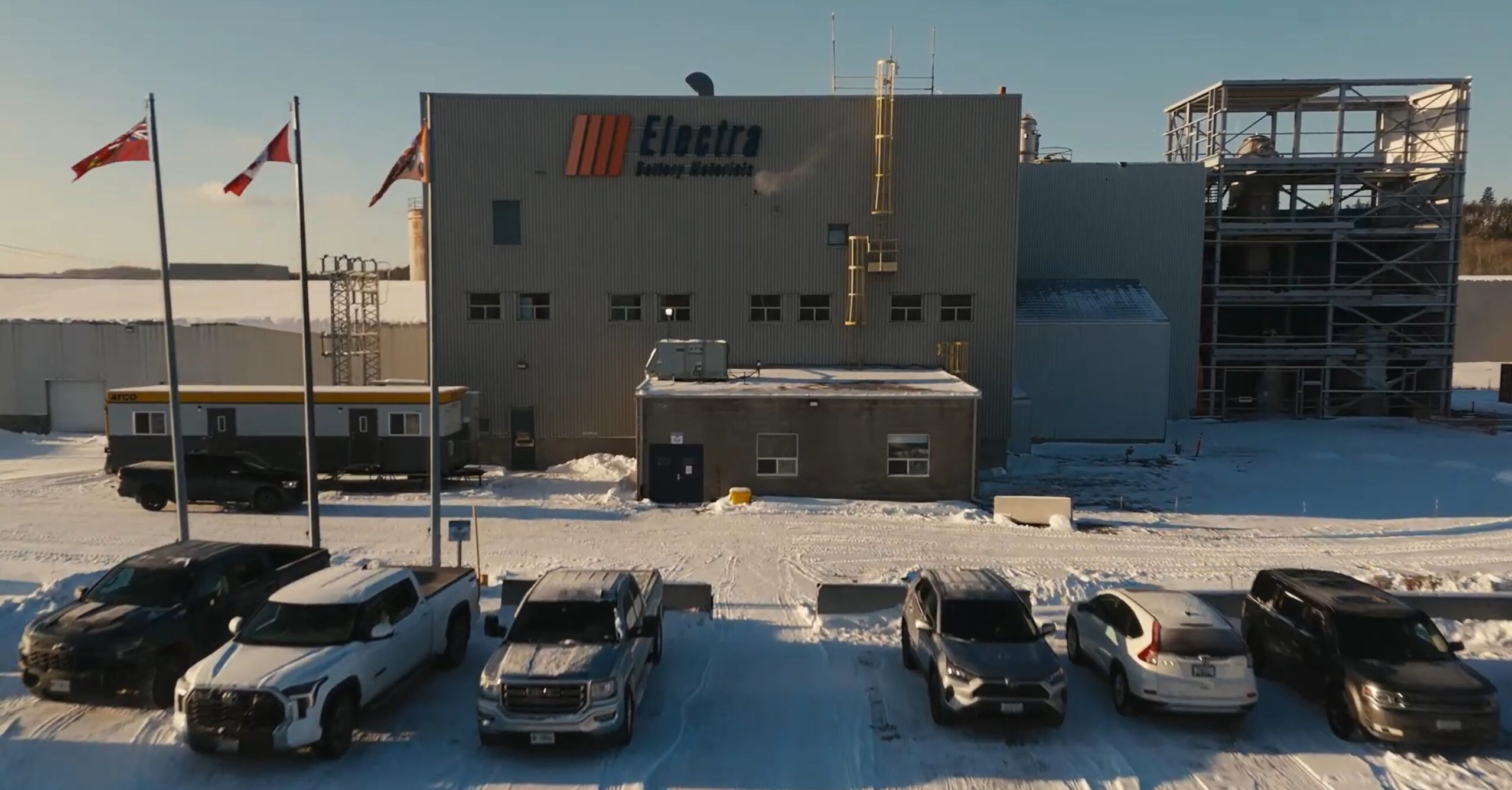
Battery materials infrastructure development in Northern Ontario continues to expand as Electra Battery Materials advances work on its cobalt refinery project north of Sudbury.
According to a recent industry report from the Canadian Mining Journal, the company has awarded a $25 million contract to WB Melback for construction of the refinery’s solvent extraction plant — a major processing component in the production of battery-grade cobalt sulfate.
The project, tracked within Respect My Planet’s lithium-ion battery infrastructure GIS system at Electra’s Canadian Refinery, represents one of the more important downstream battery materials developments currently underway in Canada.
Building a Domestic Battery Materials Supply Chain
The refinery is strategically positioned within Northern Ontario’s mining and metals corridor, a region already tied to nickel, copper, cobalt, and critical minerals production.
Once operational, the facility is expected to process cobalt sulfate for electric vehicle battery applications, reducing North America’s dependence on overseas refining capacity. While mining projects often receive the bulk of public attention, refining infrastructure is increasingly becoming a major bottleneck in Western battery supply chains.
Electra’s refinery adds an important midstream processing layer between upstream mining operations and downstream battery manufacturing facilities.
Several nearby mining and metals assets already tracked in the Respect My Planet GIS system highlight how interconnected this regional ecosystem has become, including:
Together, these projects form part of a broader critical minerals and battery materials cluster extending across Ontario and Quebec.
Why Solvent Extraction Matters
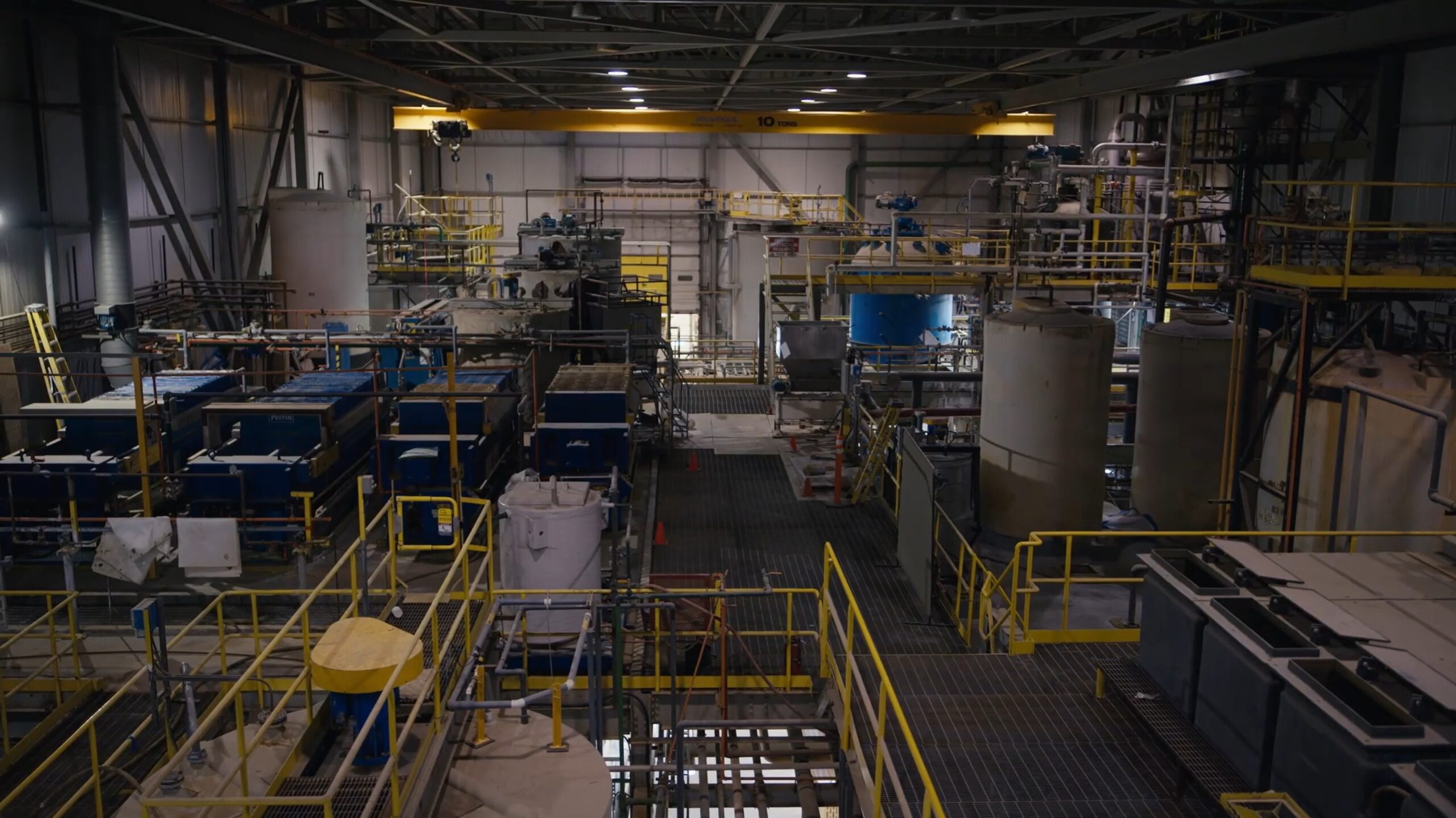
Solvent extraction systems are a critical component of modern hydrometallurgical processing facilities. In battery materials applications, they are used to separate and purify valuable metals into battery-grade products suitable for cathode manufacturing.
By advancing this phase of construction, Electra is moving beyond concept-stage planning and further into physical infrastructure deployment.
That distinction matters.
Across North America, governments and industry groups have emphasized the need for domestic battery supply chains, but many projects remain years away from execution. Active construction contracts and equipment installation are stronger indicators that industrial capacity is actually being built.
Northern Ontario’s Growing Battery Corridor
Northern Ontario continues to emerge as one of Canada’s most strategically important battery materials regions due to several overlapping advantages:
- Existing mining expertise
- Rail and highway access
- Established smelting and refining infrastructure
- Access to hydroelectric power
- Proximity to both Canadian and U.S. EV manufacturing markets
The Sudbury-Timmins corridor in particular is increasingly becoming tied into broader North American electrification and energy transition supply chains.
Projects like Electra’s refinery also help strengthen geographic connections between upstream mineral extraction and downstream manufacturing investment occurring across the Great Lakes region.
As additional nickel, cobalt, lithium, graphite, and copper projects advance across Canada, processing facilities such as Electra’s refinery may play a growing role in regional supply chain integration.
For infrastructure observers, the project is another example of how battery supply chain development is no longer centered solely around mines or gigafactories. Midstream refining capacity is becoming an equally important part of the North American energy transition buildout.
Mapping North America’s Battery Infrastructure
Projects like Electra’s refinery are part of a much larger industrial buildout now taking shape across Canada, the United States, and Mexico. Respect My Planet tracks this rapidly evolving ecosystem through its Lithium-ion Battery North America GIS System, an interactive infrastructure map built using the NAATBatt database as a foundational reference layer and expanded with ongoing project research, geographic analysis, and infrastructure linking.
The GIS platform maps a wide range of battery supply chain assets, including:
- Lithium, nickel, cobalt, graphite, and copper mines
- Refining and processing facilities
- Cathode and anode material plants
- Battery cell manufacturing projects
- Recycling operations
- Chemical processing infrastructure
- Related transportation and industrial corridors
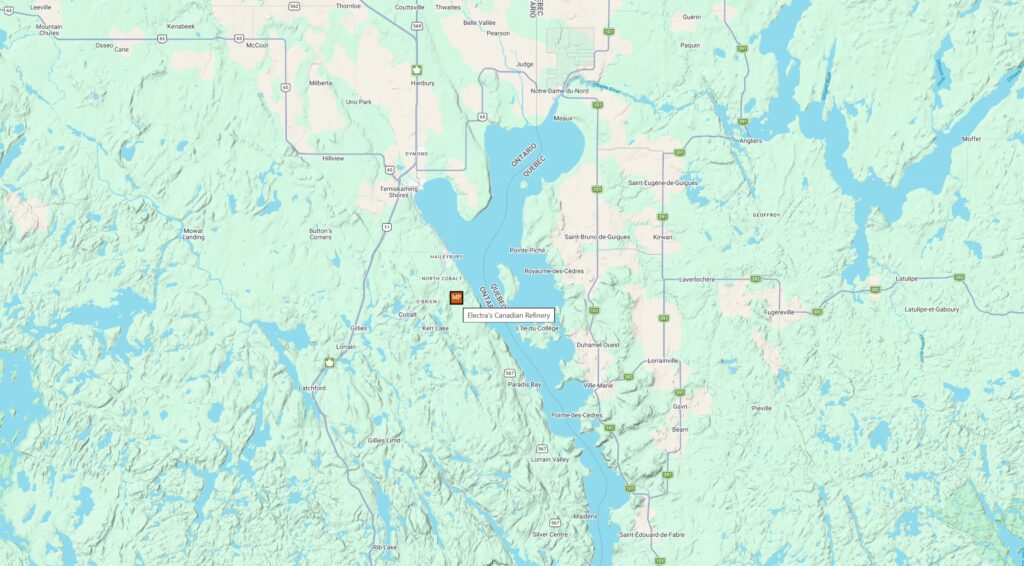
Rather than viewing projects in isolation, the system helps visualize how individual facilities connect into broader regional supply chains. Users can explore relationships between upstream mining operations, midstream refining assets, and downstream battery manufacturing investments throughout North America.
As more battery materials projects move from announcement stage into active construction and production, infrastructure intelligence and geographic context are becoming increasingly important for understanding how the North American battery economy is taking shape.
Leave a Reply